
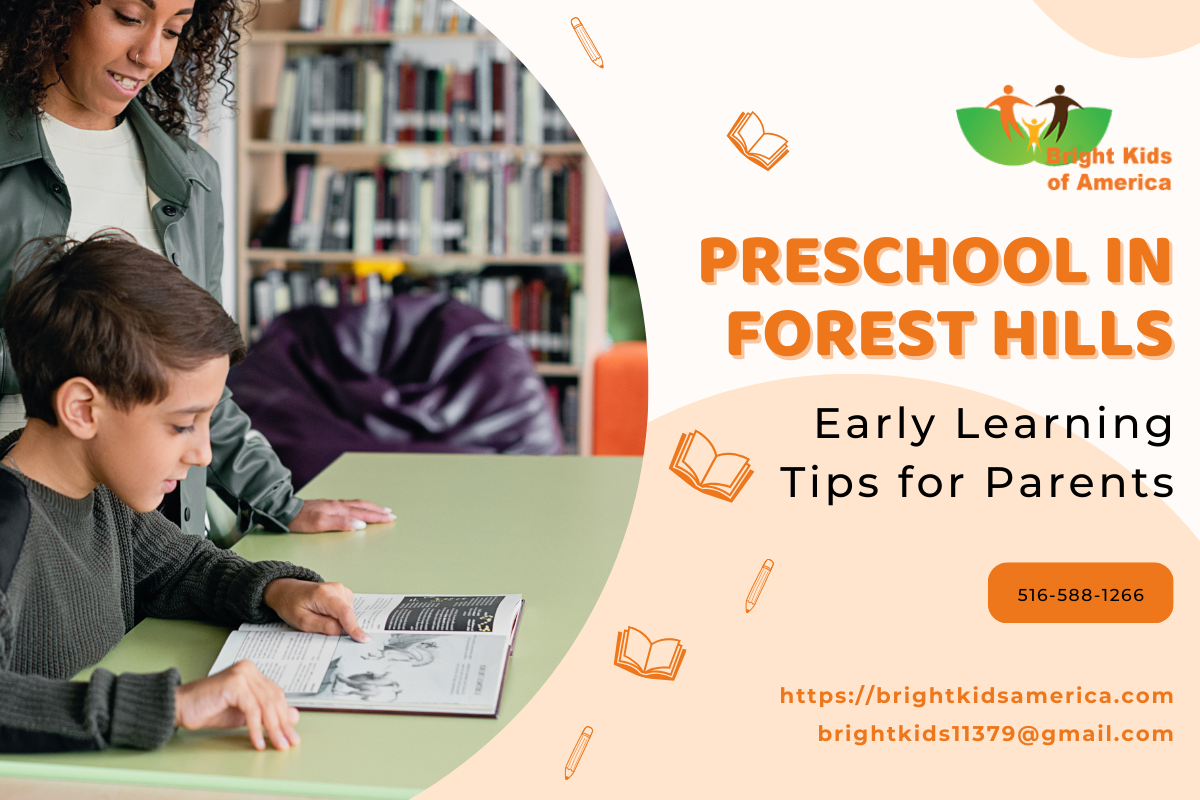

At Bright Kids America, we believe every family’s journey to finding the right preschool is as unique as the child it serves. Choosing a preschool in Forest Hills is not only about location or schedule; it is about matching a learning philosophy to your child’s temperament, finding a community of caregivers who respect curiosity, and establishing routines that support social, emotional, and cognitive growth. We write content so well that we can leave other websites behind, and our goal here is to guide you through practical, experience-based advice so you can make confident decisions and foster everyday learning at home and in school.
How we approach choosing a preschool in Forest Hills that fits your child
We start by listening. The right environment balances structure and play, allowing children to explore while feeling secure. At Bright Kids America, we emphasize an atmosphere where teachers observe and build on children’s interests, where language-rich interactions happen throughout the day, and where routines give children the predictability that nurtures independence. When you tour programs in Forest Hills, we encourage looking beyond glossy brochures: observe how teachers engage with children during transitions, whether materials invite open-ended play, and whether the pace of the day feels aligned with your child’s energy. These observations tell you more than any mission statement.
Equally important is the partnership between home and school. We recommend discussing daily rhythms with prospective teachers-sleep, snack, and personalized attention practices expectations align. Families thrive when educators welcome communication and when parents know how to reinforce learning at home in simple, everyday ways. We help families bridge that classroom-home continuum with clear, respectful dialogue and by modeling activities that extend learning naturally into daily life
Early learning tips parents can start using today
Young children learn best through meaningful interactions embedded in routine moments. Rather than scheduling formal lessons, we suggest turning ordinary errands into discovery opportunities. Talking through grocery items, noticing shapes and colors on a stroll, or counting steps together transforms mundane tasks into rich math and language experiences. At Bright Kids America, we coach families on integrating literacy and numeracy into conversation, using questions that invite children to think aloud and narrate their ideas. This fosters not only vocabulary but also the confidence to experiment and take intellectual risks.
Social-emotional learning is another critical focus. Children need practice naming feelings, managing frustration, and cooperating with peers. We support parents in creating consistent phrases and predictable responses, such as validating emotions and offering choices. These techniques build emotional vocabulary and self-regulation skills that are essential for success in any preschool environment. Play-based conflict resolution-where adults guide children to express wants and negotiate solutions-turns conflict into a learning moment rather than a setback..
How preschool in Forest Hills supports school readiness and lifelong curiosity
A high-quality preschool experience nurtures executive function-the set of skills that includes attention, working memory, and flexible thinking. In classrooms, teachers offer scaffolding: breaking tasks into manageable steps, modeling strategies, and gradually releasing responsibility to the child. We implement routines that teach organizational habits, such as tidying up after activities or following a morning checklist, because these small practices compound into strong learning habits. Families who consistently reinforce these expectations at home see children develop the perseverance and focus that make later academic tasks more approachable.
Creativity and curiosity are equally essential. We cultivate environments rich in open-ended materials – blocks, art supplies, puppets – that allow children to tell stories, solve problems, and invent new rules. This approach respects the child as an active learner and preserves the joy of discovery that fuels motivation for years to come. When children arrive curious and confident, the classroom becomes a laboratory for experimentation rather than a place for rote compliance, and that is the hallmark of the learning experiences we create at Bright Kids America.
Practical tips for transitions, separation, and routines
Transitions are some of the most challenging moments for families and educators alike, and yet they offer powerful opportunities for building resilience. We advise establishing short, predictable separation routines that include a loving goodbye and a consistent cue, such as a hug followed by a wave. Clear rituals reduce anxiety by creating reliable expectations. For mornings and evenings, small rituals-laying out clothes together, packing a school bag with a child’s involvement, or sharing a specific goodnight phrase-help children feel competent and in control.
Consistency is the backbone of success. Whether introducing a nap schedule, limiting screen time before bed, or setting aside daily reading moments, predictability supports biological rhythms and attention. We help families design simple, manageable routines that honor both the child’s needs and the family’s lifestyle, because rigid plans that don’t fit daily life rarely last. Practical, flexible routines foster stability and make learning a natural part of every day.
Frequently Asked Questions
Is preschool in Forest Hills right for my child?
Deciding if preschool is the right step is deeply personal and depends on your child’s social readiness, your family’s needs, and your goals for early education. We recommend observing how your child plays with peers, responds to routines, and handles brief separations. A supportive program in Forest Hills can provide structured play, social learning, and teacher-guided activities that complement home learning. At Bright Kids America, we welcome families to visit and reflect with us about timing and fit.
How can we ease separation anxiety during the first weeks?
Separation anxiety can be eased through brief, predictable routines and by building trust with teachers. We encourage parents to practice short separations at home, maintain consistent drop-off rituals, and communicate openly with staff about what comforts the child. Teachers often suggest transitional objects and positive reinforcement for brave goodbyes, turning initial anxiety into opportunities to celebrate small successes.
What should I look for during a preschool visit?
During a visit, watch for warm teacher-child interactions, accessible materials that invite choice, and a safe, organized environment. Notice how caregivers respond to children’s questions and whether the schedule balances active play with quieter moments. Trust your instincts: if the space feels welcoming and respectful, and teachers demonstrate adaptive approaches to learning, you are likely in the right place.
How can we support language development at home?
Language grows through conversation, storytelling, and shared reading. We advise families to narrate daily activities, ask open-ended questions, and read together frequently, using books as a springboard for talk. Encourage children to tell stories about their day and to describe what they notice; these habits build vocabulary and critical thinking naturally.
What role does play have in school readiness?
Play is the vehicle through which children experiment with ideas, learn social rules, and develop executive function. Unstructured and guided play enables problem-solving, creativity, and emotional processing. We honor play as essential to readiness, not as a detour from academic goals but as the very path that leads children to durable learning.